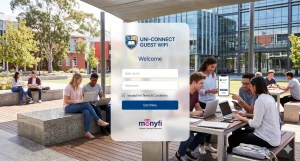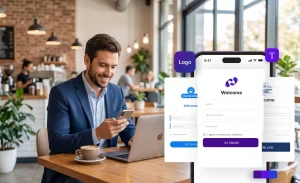
It is 9 a.m. in a busy city cafe. Customers are lining up for coffee, laptops open, phones in hand. Someone asks the staff, “What’s the Wi-Fi password?” Another customer complains the internet is painfully slow. In the background, an unknown device is consuming bandwidth, and the owner has no idea who is connected or what they are doing on the network.
Now picture a hotel front desk dealing with a different problem. A guest reports suspicious activity after using the hotel Wi-Fi. The IT team scrambles to investigate, only to realize the network has no user tracking, no access logs, and no legal consent records.
These scenarios are common, and they highlight a growing problem. In 2026, guest Wi-Fi is no longer just a nice-to-have service. It is a security risk, a customer experience touchpoint, and a potential revenue channel. Businesses must decide whether traditional Wi-Fi is still good enough or if captive portals for guest Wi-Fi are the smarter choice.
Traditional Wi-Fi usually means an open network or a shared password with no authentication beyond basic access. Captive portals, on the other hand, use a branded login or splash page that guests interact with before getting online. That single difference changes everything, from security and compliance to marketing and monetization.
In this article, we will compare captive portals vs traditional Wi-Fi head to head. You will see the real advantages, the drawbacks, and why more hotels, cafes, retail stores, and venues are switching to captive portals for guest Wi-Fi in 2026.
What Is Traditional Wi-Fi? Pros and Cons
Traditional Wi-Fi, often called open Wi-Fi or shared-password Wi-Fi, is the simplest form of guest internet access. Users either connect without a password or enter a single password shared with everyone.
How traditional Wi-Fi works
- One Wi-Fi network name
- No user identification
- No login page or authentication
- Same access level for all users
Pros of traditional Wi-Fi
Traditional Wi-Fi is still used because it feels simple and familiar.
Advantages include:
- Very easy to set up
- No login steps for guests
- No additional software required
- Low upfront cost
- Works for extremely small setups
Cons of traditional Wi-Fi
What used to be “simple” is now a major liability.
Key drawbacks include:
- Serious security vulnerabilities
- No user tracking or accountability
- Zero customer data collection
- No branding or promotions
- No monetization options
- High risk of bandwidth abuse
- Legal exposure due to lack of terms acceptance
According to multiple Wi-Fi security studies, open networks are among the easiest targets for man-in-the-middle attacks. For hotels, cafes, and retail stores, this is a risk that grows every year.
Traditional Wi-Fi drawbacks for hotels, cafes, and retail:
- Anyone can connect, including malicious users
- Guests share the same network as unknown devices
- You cannot identify who did what on your network
- You gain no business value beyond basic internet access
Traditional Wi-Fi may still work for a tiny office with no guests, but for customer-facing businesses in 2026, the limitations are hard to ignore.
What Are Captive Portals for Guest Wi-Fi? Pros and Cons
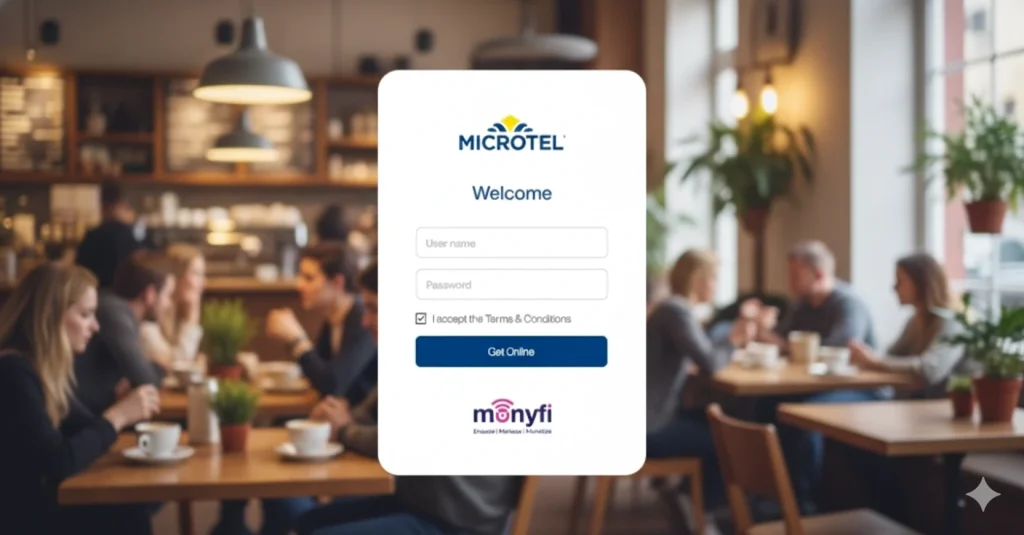
Captive portals for guest Wi-Fi use a web-based authentication system. When users connect, they are redirected to a splash page where they must take an action before gaining access.
How captive portals work
- User connects to guest Wi-Fi
- A branded splash page appears
- User accepts terms or logs in via email, password or one tap
- Access is granted based on rules and policies
Benefits of captive portals for guest Wi-Fi
This model unlocks a wide range of advantages.
Key benefits include:
- Enhanced security
Captive portals add Wi-Fi authentication, device isolation, and access logging. Guest traffic stays separate from internal systems. - User data collection and analytics
Businesses can collect emails, visit frequency, and device insights. Industry reports show 25 to 40 percent higher data capture with captive portals. - Branded user experience
Splash pages match your brand and promote offers, events, or services. - Compliance and legal protection
Guests accept terms of service and privacy policies, supporting GDPR and CCPA compliance. - Bandwidth control
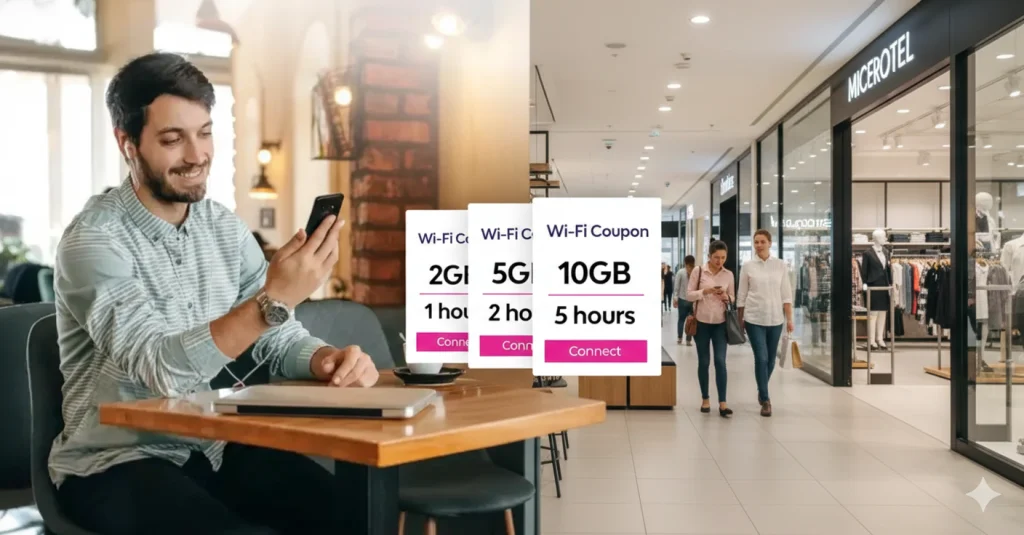
Limit speeds, sessions, or usage to prevent network abuse. - Monetization opportunities
Run targeted ads, sell data vouchers, or offer paid premium access. - Improved guest experience
Modern portals support fast, mobile-friendly logins with minimal friction. - Marketing and CRM integration
Wi-Fi becomes a channel for customer engagement and loyalty. - Scalability
Cloud Wi-Fi platforms allow easy multi-location management. - Measurable ROI
Reduced support tickets and increased engagement justify the investment.
Minor drawbacks to consider
Captive portals are not perfect, but the downsides are small.
Possible cons:
- Slight login step for users
- Requires proper configuration
- Needs ongoing monitoring
In practice, well-designed captive portals remove friction rather than create it.
Head-to-Head Comparison: Captive Portals vs Traditional Wi-Fi
Below is a direct comparison to help you decide.
| Feature | Traditional Wi-Fi | Captive Portals for Guest Wi-Fi | Winner |
|---|---|---|---|
| Security | Low | High with authentication | Captive Portals |
| User Experience | Inconsistent | Controlled and optimized | Captive Portals |
| Data Collection | None | Emails, visits, behavior | Captive Portals |
| Branding | None | Fully branded splash pages | Captive Portals |
| Monetization | Not possible | Ads, vouchers, paid access | Captive Portals |
| Compliance | High legal risk | Clear consent and logs | Captive Portals |
| Bandwidth Control | Manual or none | Automated policies | Captive Portals |
| Analytics | None | Detailed insights | Captive Portals |
| Scalability | Poor | Cloud based | Captive Portals |
| Setup Complexity | Very low | Moderate | Traditional Wi-Fi |
| Cost Over Time | Hidden costs | Strong ROI | Captive Portals |
| Customer Engagement | None | High | Captive Portals |
Summary:
Traditional Wi-Fi only wins on simplicity. Captive portals win everywhere that matters for modern businesses.
When Might Traditional Wi-Fi Still Make Sense?
To be fair, there are limited scenarios where traditional Wi-Fi may still be acceptable.
Examples include:
- Very small offices with no guest traffic
- Temporary setups with no compliance needs
- Ultra-low budget environments
- No interest in data, branding, or monetization
If your business has customers, visitors, or guests, these scenarios rarely apply.
Why Captive Portals Are the Future of Guest Wi-Fi in 2026
Guest Wi-Fi expectations have changed.
Key trends shaping 2026
- Stricter data privacy regulations worldwide
- Rising cyber threats targeting public Wi-Fi
- Growing demand for personalized experiences
- Increased need to monetize infrastructure
- AI-driven network optimization
- Seamless mobile-first logins
Captive portals for guest Wi-Fi align perfectly with these trends. They turn Wi-Fi from a cost center into a business tool that supports security, marketing, and growth.
Businesses that stick with traditional Wi-Fi risk falling behind on both compliance and customer experience.
The Best Option: Why Monyfi Stands Out as the Top Choice
Choosing captive portals is step one. Choosing the right platform is what determines success.
Monyfi is built specifically for businesses that rely on guest Wi-Fi, including hotels, cafes, retail stores, restaurants, malls, and venues.
Why Monyfi works better than generic solutions
Cloud-based and purpose-built
Monyfi is a SaaS platform designed for guest Wi-Fi management and monetization, not a generic networking add-on.
Fully branded captive portals
Create custom welcome pages with multiple login options such as unique passwords, email, and one-tap access. Branding stays consistent across locations.
Enterprise-grade security
Features include RADIUS authentication, device isolation, policy control, and secure access management.
Powerful monetization tools
Run targeted ads, sell data vouchers, and offer paid Wi-Fi plans without external tools.
Deep analytics and insights
Understand user behavior, repeat visits, peak hours, and campaign performance from one dashboard.
Built for real businesses
Designed for hospitality, retail, cafes, co-working spaces, and multi-location operations.
Operational simplicity
Centralized management reduces IT workload while improving reliability.
Hotels using branded portals like Monyfi often report higher guest satisfaction and better engagement during the login experience.
Instead of juggling multiple systems for security, analytics, and marketing, Monyfi delivers everything in one platform.
Call to action:
Visit https://monyfi.com/ to explore how Monyfi can transform your guest Wi-Fi today.
Conclusion
In 2026, the choice between captive portals and traditional Wi-Fi is no longer difficult. Traditional Wi-Fi may feel simple, but it fails in security, compliance, data, branding, and revenue.
Captive portals for guest Wi-Fi clearly outperform open networks by delivering:
- Stronger security
- Legal protection
- Better guest experiences
- Valuable customer insights
- Real monetization opportunities
For hotels, cafes, retail stores, and venues, guest Wi-Fi is part of the customer journey. Treating it as a strategic asset rather than a basic utility makes a measurable difference.
If you are ready to move beyond outdated Wi-Fi models, switching to a robust captive portal platform like Monyfi is the logical next step.
Frequently Asked Questions
Are captive portals better than open Wi-Fi?
Yes. They provide better security, compliance, analytics, and user experience.
What is the best captive portal for guest Wi-Fi in 2026?
Solutions like Monyfi that combine security, branding, analytics, and monetization stand out.
Do captive portals annoy users?
No, when designed correctly they offer fast and seamless access.
Can captive portals help monetize guest Wi-Fi?
Yes. Ads, vouchers, and premium plans are common monetization methods.
Are captive portals required for GDPR compliance?
They strongly support compliance by capturing consent and usage logs.
Is captive portal Wi-Fi expensive?
It is cost-effective over time due to reduced risks and higher ROI.