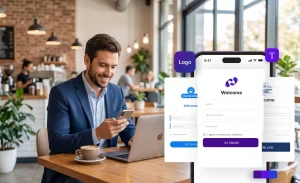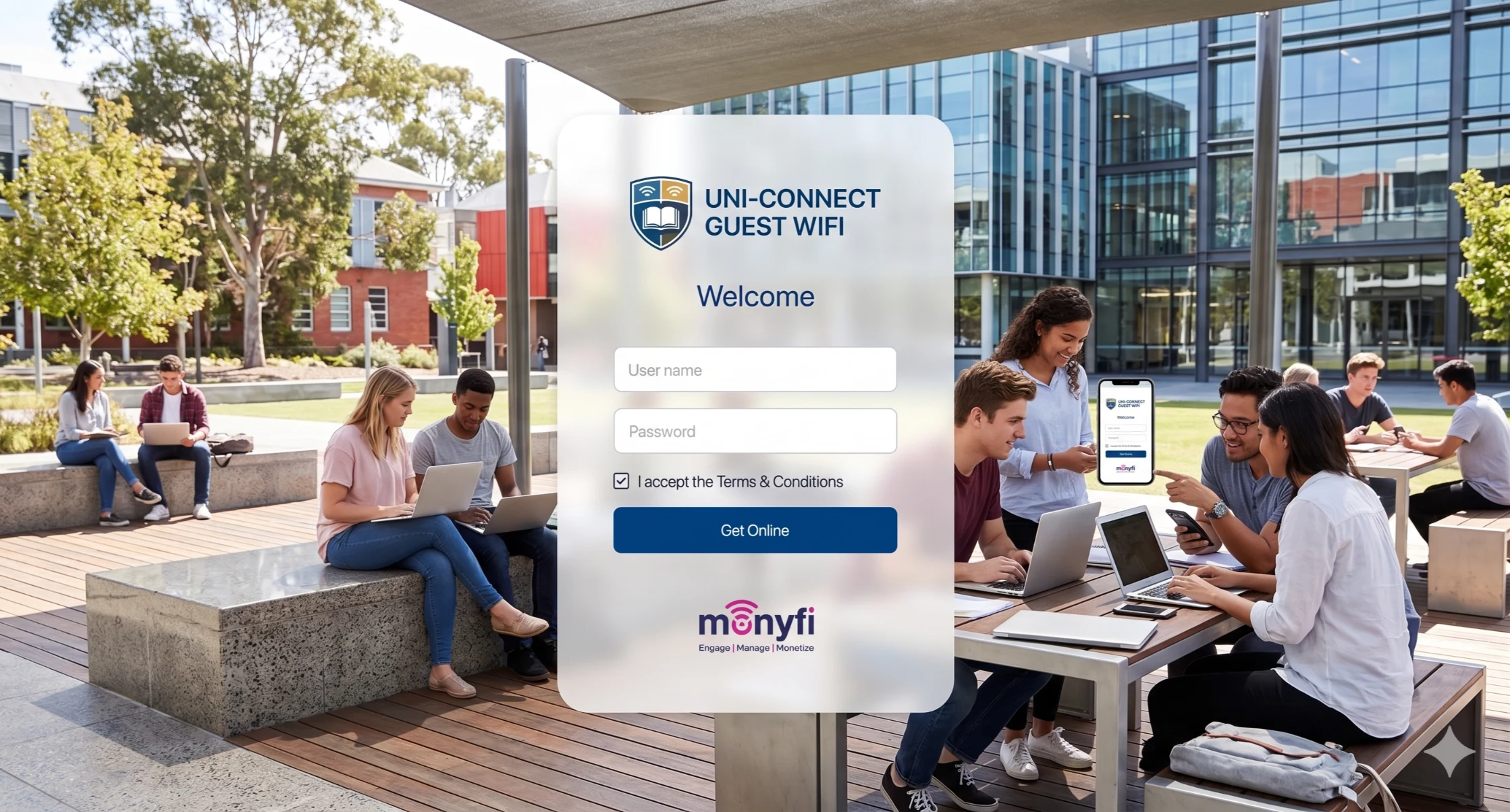
University guest WiFi has become a core part of campus operations. Students, faculty, visitors, and event participants all expect fast and secure internet access. However, providing open connectivity without proper controls can create security risks, network congestion, and lost engagement opportunities.
The good news is that modern university guest WiFi systems now go far beyond basic internet access. Today, institutions can issue secure WiFi vouchers, monitor network usage, and improve student engagement through personalized connectivity experiences. In addition, advanced authentication and analytics tools help universities protect their infrastructure while delivering reliable service to thousands of users.
Therefore, universities that invest in structured guest WiFi management gain several advantages. They improve campus security, simplify access for visitors, and collect valuable data about student behavior and campus activity. As a result, administrators can make better decisions about resource allocation, student services, and event planning.
In this guide, you will learn how to deploy a secure and scalable guest WiFi system for universities, how to use vouchers to drive engagement, and how modern platforms like Monyfi enable safe and efficient campus connectivity.
Why Universities Need Dedicated Guest WiFi in 2026
Universities are complex environments. They host students, researchers, visiting lecturers, parents, and event attendees every day. Therefore, relying on a single shared network for everyone is no longer practical.
A dedicated university guest WiFi network ensures that external users can connect without affecting critical academic systems.
Key Reasons Universities Need Guest WiFi
1. Improved Network Security
Guest users should not access internal systems. A separate network prevents unauthorized access to sensitive data.
2. Better User Experience
Students and visitors expect seamless connectivity. A structured login process ensures reliable performance.
3. Controlled Internet Usage
Administrators can limit bandwidth, session duration, and device access.
4. Data-Driven Campus Management
Modern guest WiFi platforms provide detailed analytics about user behavior and traffic patterns.
Typical Campus Scenarios
Universities use guest WiFi in many situations:
- Orientation programs
- Conferences and workshops
- Graduation ceremonies
- Research collaborations
- Campus tours
- Library and learning spaces
In addition, many institutions now use consent-based WiFi systems to collect feedback and share announcements with students.
Benefits of Dedicated Guest WiFi
| Benefit | Impact |
|---|---|
| Secure network separation | Protects academic systems |
| Controlled user access | Reduces misuse |
| Data collection | Improves planning |
| Reliable connectivity | Enhances student satisfaction |
Ultimately, a dedicated university guest WiFi network improves both security and operational efficiency.
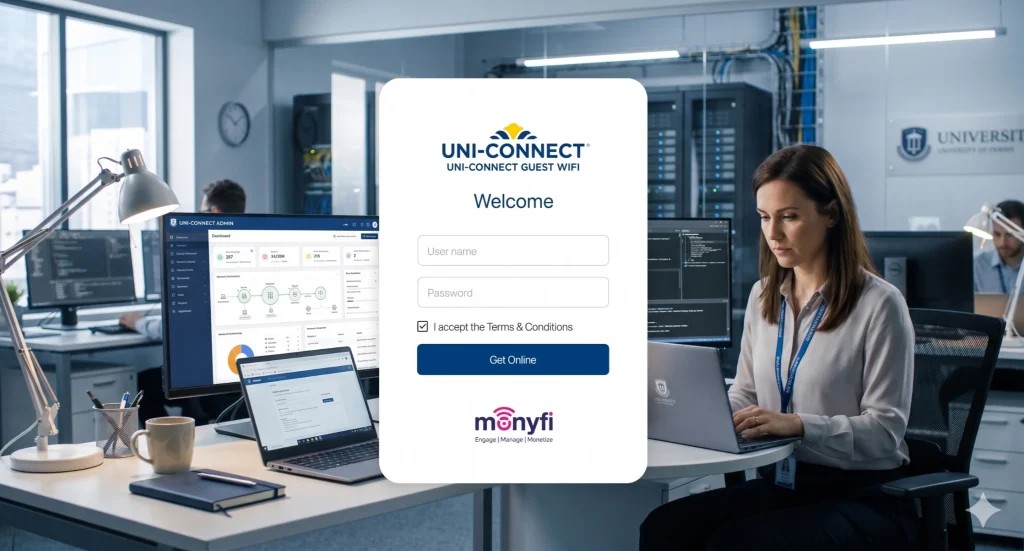
Secure Access Models for Campuses
Universities support thousands of users daily. Therefore, flexible access methods are essential.
Modern guest WiFi management systems provide multiple authentication options to meet different needs.
Common Access Models
Open Access
Users connect without credentials. This model is simple but less secure.
Voucher-Based Access
Users receive a temporary code that grants internet access.
Social Login
Users sign in using email or social media accounts.
Role-Based Access
Different users receive different permissions based on their role.
Comparison of Access Models
| Access Model | Security Level | Ease of Use | Best Use Case |
|---|---|---|---|
| Open Access | Low | Very easy | Public spaces |
| Voucher Access | High | Easy | Events and visitors |
| Social Login | Medium | Easy | Student engagement |
| Role-Based Access | Very high | Moderate | Faculty and staff |
Therefore, universities often combine several access models to balance security and convenience.
Example
A university may:
- Provide vouchers to conference attendees
- Allow students to log in using institutional credentials
- Grant staff extended access privileges
This flexible approach ensures secure and reliable connectivity across campus.

Wi-Fi Vouchers That Boost Student Engagement
WiFi vouchers are not only a security tool. They are also a powerful engagement strategy.
In 2026, many universities use WiFi vouchers for student engagement and communication.
How WiFi Vouchers Work
The process is simple:
- The university generates a voucher code
- The user enters the code on the login page
- The system grants access for a defined period
This method ensures controlled connectivity while providing a seamless user experience.
Benefits of WiFi Vouchers
Improved Security
Each user receives a unique access code.
Controlled Usage
Administrators can set limits on:
- Session duration
- Data usage
- Device connections
Enhanced Engagement
Vouchers can deliver targeted messages to users.
Engagement Examples
Universities use vouchers to:
- Promote campus events
- Share announcements
- Offer student discounts
- Provide orientation resources
Example Voucher Strategy
| User Group | Voucher Duration | Purpose |
|---|---|---|
| Visitors | 4 hours | Campus tours |
| Students | 24 hours | Daily access |
| Conference attendees | 3 days | Event connectivity |
Therefore, university guest WiFi vouchers improve both security and communication.

Analytics for Campus Insights
Data is one of the most valuable resources in modern education.
A well-managed university guest WiFi system provides real-time analytics that help administrators understand campus activity.
Key Metrics Universities Track
User Sessions
Number of connections per day.
Peak Usage Times
Periods with the highest network demand.
Device Types
Laptops, smartphones, and tablets.
Location Data
Areas with the most activity.
Why Analytics Matters
Analytics helps universities:
- Optimize network performance
- Improve campus services
- Plan events more effectively
- Allocate resources efficiently
Example Insights
A university may discover that:
- The library experiences peak traffic in the evening
- Lecture halls have high usage during exams
- Campus events increase network demand
These insights support better decision making.
Sample Analytics Dashboard Metrics
| Metric | Example Value |
|---|---|
| Daily users | 3,200 |
| Average session duration | 1 hour |
| Peak usage time | 7 PM |
| Most active location | Library |
Therefore, WiFi analytics for universities transforms connectivity into actionable insights.
AAA Security & Role-Based Access
Security is a top priority for universities. Therefore, many institutions rely on AAA authentication to manage network access.
AAA stands for:
Authentication
Authorization
Accounting
Together, these functions ensure secure and controlled connectivity.
Authentication
Authentication verifies user identity.
Examples:
- Student ID login
- Voucher code
- Email verification
Authorization
Authorization determines what users can access.
Examples:
- Internet access only
- Restricted websites
- Full network privileges
Accounting
Accounting records user activity.
Examples:
- Login time
- Data usage
- Session duration
Benefits of AAA Security
Enhanced Protection
Prevents unauthorized access.
User Accountability
Tracks network activity.
Regulatory Compliance
Supports institutional security policies.
Role-Based Access Example
| User Role | Access Level |
|---|---|
| Student | Standard internet access |
| Faculty | Extended bandwidth |
| Guest | Limited session duration |
| Administrator | Full network control |
Therefore, AAA-based university guest WiFi systems provide both security and flexibility.
Best Practices & Common Pitfalls
Deploying university guest WiFi requires careful planning. Therefore, following best practices helps ensure reliable performance and security.
Best Practices
1. Separate Guest and Internal Networks
Always isolate guest traffic from academic systems.
2. Use Secure Authentication
Implement voucher or role-based login methods.
3. Monitor Network Usage
Track traffic patterns and performance.
4. Provide Clear Login Instructions
Ensure users can connect quickly.
5. Update Security Policies Regularly
Keep systems protected against emerging threats.
Common Pitfalls
Weak Password Policies
Simple passwords increase security risks.
Unlimited Bandwidth
Unrestricted usage can slow the network.
Lack of Monitoring
Without analytics, problems go unnoticed.
Poor Network Segmentation
Mixing guest and internal traffic creates vulnerabilities.
Quick Checklist for Universities
- Enable secure login
- Configure bandwidth limits
- Monitor network activity
- Use role-based access
- Maintain compliance policies
Therefore, following these guidelines ensures a safe and efficient campus guest WiFi system.
Conclusion
In 2026, reliable connectivity is essential for modern education. Students and visitors expect fast and secure internet access wherever they go on campus. Therefore, universities must implement structured university guest WiFi systems that support both security and engagement.
By using secure access models, WiFi vouchers, analytics, and AAA authentication, institutions can protect their networks while improving the student experience. In addition, data-driven insights help administrators optimize operations and plan for future growth.
Modern platforms like Monyfi make it easy to deploy scalable and secure guest WiFi solutions for universities. With centralized management, real-time analytics, and flexible access controls, institutions can deliver reliable connectivity to thousands of users without increasing complexity.
Start your free Monyfi trial today or book a demo to transform your campus connectivity.
FAQ: University Guest WiFi
1. What is university guest WiFi?
University guest WiFi is a dedicated wireless network designed for visitors, students, and temporary users on campus. It allows secure internet access without exposing internal academic systems. This separation improves security, controls network usage, and ensures reliable connectivity for everyone.
2. How do WiFi vouchers work in universities?
WiFi vouchers provide temporary login credentials that allow users to access the network for a specific time period. Universities generate voucher codes and distribute them to students, visitors, or event attendees. Administrators can control session duration, bandwidth limits, and user permissions through the voucher system.
3. Why is secure guest WiFi important for universities?
Secure guest WiFi protects sensitive institutional data and prevents unauthorized access to internal systems. It also ensures stable network performance during peak usage periods. In addition, secure connectivity helps universities meet security policies and maintain a safe digital environment for students and staff.
4. What analytics can university guest WiFi systems provide?
Modern university guest WiFi analytics tools provide valuable insights such as:
- Number of users connected
- Peak usage times
- Session duration
- Device types
- High-traffic campus locations
These insights help administrators optimize network performance, improve campus services, and plan events more effectively.
5. What is AAA authentication in university WiFi networks?
AAA stands for Authentication, Authorization, and Accounting. It is a security framework that verifies user identity, controls access permissions, and tracks network activity. Universities use AAA authentication to ensure secure connectivity, manage user roles, and maintain accountability across campus networks.
6. Can universities limit internet access for different users?
Yes. Universities can apply role-based access control to assign different permissions to students, faculty, staff, and visitors. For example:
- Guests may receive limited session time
- Students may have standard internet access
- Faculty may receive higher bandwidth
This approach improves security and ensures fair network usage.
7. How can university guest WiFi improve student engagement?
Guest WiFi systems can deliver announcements, event notifications, and campus resources directly through the login page. Universities can also use vouchers to promote programs, provide digital resources, and share important updates. As a result, students stay informed and more connected to campus activities.
8. Is university guest WiFi scalable for large campuses?
Yes. Modern cloud-based guest WiFi platforms are designed to support thousands of simultaneous users across multiple buildings. They allow centralized management, automated access control, and real-time monitoring, making them ideal for large universities and high-traffic environments.