WiFi vouchers and paid access plans are two of the most common ways venues and ISPs monetize guest internet, and the “right” model depends on your traffic patterns, target customers, and backend platform capabilities. Monyfi sits in the middle as a cloud AAA and captive portal platform that can enforce both voucher-based and account-based paid access across Wi-Fi, GPON, LTE, and other access technologies. The goal of this guide is to help you decide which monetization model fits your venue or network, and then show how to implement it in a secure, scalable way using a platform like Monyfi.
Vouchers vs Paid Plans – Side-by-Side Comparison
The table focuses on the core decision factors operators actually care about: who you sell to, how you collect money, operational complexity, and long-term revenue behavior.
| Dimension | WiFi vouchers (prepaid codes) | Paid access plans (accounts/subscriptions) |
|---|---|---|
| Core concept | One-time prepaid code; user pays once, consumes quota (time/data), and the code expires. | User account with recurring billing or one-off card-based payments tied to a profile rather than a single code. |
| Typical use cases | Cafes, shared spaces, hostels, events, community hotspots, reseller outlets. | Residential/SME broadband over Wi-Fi, co-working memberships, campus plans, premium hotel tiers. |
| Revenue profile | High transaction count, lower ARPU per user, cash-friendly; good for walk-in traffic. | Fewer transactions, higher ARPU per user, predictable MRR; best for repeat or long-stay users. |
| Payment methods | Cash at counter, mobile money, POS, printed cards, WhatsApp-delivered e-vouchers. | Cards, bank transfers, telco billing, digital wallets; usually online or via app/portal. |
| User identity | Often anonymous or minimal data capture (e.g., phone/email on captive portal). | Stronger identity: username/password, phone-number login, or integrated CRM profile. |
| Network control | Per-code limits for bandwidth, time, and data; easy to segment tiers and manage crowding. | Policy per user or plan; supports QoS, FUP, shaping by subscriber profile. |
| Operational overhead | Need processes for generating, distributing, and reconciling voucher stock; great for partners/resellers. | Need billing workflows, KYC, customer support for logins, and subscription lifecycle management. |
| Marketing potential | Good for “visit-based” campaigns: print codes on receipts, bundles (coffee + 2-hour WiFi). | Strong for lifecycle marketing: upsell higher tiers, cross-sell services, loyalty integration. |
| Risk of abuse | Shared codes and reselling if not rate-limited, capped per device, or bound to MAC. | Shared accounts possible but easier to track and lock by device, quota, or concurrent sessions. |
| Ideal buyer persona | Venue operators, mall tenants, small WISPs reselling access, community projects. | ISPs, campus networks, co-working providers, hotels with corporate contracts. |
Keeping those differences in mind, the rest of the article is about helping you choose and implement the right mix, not just describing both options.
When to Choose Each Model
When WiFi vouchers win
Choose WiFi vouchers when you monetize “per visit” rather than “per subscriber,” or when your users are price-sensitive and prefer cash. Vouchers are especially strong in these scenarios:
- High foot traffic, low loyalty
- Cafes, food courts, bus terminals, waiting areas, festivals, and pop-up events where most users will connect once or twice and never log in again.
- Multi-owner environments
- Shopping malls or public markets where a central WiFi operator sells voucher stock to tenants who resell to their own customers, making reseller margins transparent.
- Cash-heavy economies
- Regions where card penetration is low and people are used to buying prepaid top-ups or scratch cards, such as many parts of Southeast Asia and Africa.
In these settings, vouchers keep the sales flow simple: users pay at a counter, get a code, and connect immediately without needing to “become a subscriber.”
When paid access plans win
Choose paid access when your business model depends on ongoing relationships, high bandwidth per user, or SLAs. Paid plans are usually better for:
- Long-stay and recurring users
- Co-working spaces, student housing, and hotels with corporate guests expect persistent accounts, consistent speed, and frictionless reconnection.
- Subscription-focused ISPs and MSPs
- Wireless ISPs and managed WiFi providers that bill monthly for home or SME internet benefit from recurring revenue and automated renewals.
- Enterprise and campus environments
- Universities, offices, and hospitals need identity-based access for security, audit trails, and differentiated policy enforcement by role or department.
If your CFO asks about MRR, ARPU, churn, and LTV rather than daily ticket sales, paid plans usually fit better.

When to use a hybrid model
In 2026, many operators mix both models: free or very cheap vouchers for casual usage plus paid access tiers for power users. For example, a hotel may give free limited WiFi via vouchers for all guests and sell a premium subscription for conference organizers or long-stay guests who need guaranteed bandwidth.
From a business perspective, think in layers: vouchers absorb short-term, low-commitment demand, while paid plans capture the “heavy users” and stabilize monthly revenue.
How Monyfi Supports Both
Monyfi is built as a unified AAA and network management platform that can enforce both voucher-based and subscriber-based policies across Wi-Fi, GPON, LTE, and BNG environments. This means you do not have to choose a separate system for vouchers versus paid plans; the same cloud platform can authenticate users, manage captive portals, control bandwidth, and apply billing logic for both models.
Key capabilities that matter for “WiFi vouchers vs paid access”:
- Flexible access plans and data vouchers
- Monyfi lets operators define time-based, data-based, and speed-based plans, then expose those as voucher types or recurring plans inside the same portal.[monyfi]
- Branded captive portals and flows
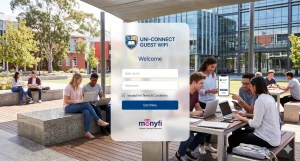
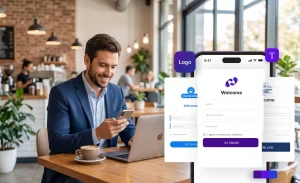
- You can create branded login pages where users either enter a voucher code or log into an account.[monyfi]
- Integration with multiple access technologies
- Support for Wi-Fi controllers, GPON, LTE, and BNG means the same voucher or subscriber profile can work across different network segments if needed.[monyfi]
- Deep analytics and reporting
- Operators can see which plans sell more, which voucher denominations move fastest, and how subscriber churn behaves over time, then optimize pricing and bundles accordingly.[monyfi]
For marketing-led operators, this unified model matters because you can run campaigns (e.g., “free 30-minute voucher with purchase”) while still nudging heavy users toward higher-value paid plans via the same captive experience.
Real Revenue Examples
To ground the “WiFi vouchers vs paid access” discussion, here are realistic directional scenarios based on how venues monetize guest WiFi today. These numbers are illustrative, not promises, but they help you compare models.
Example 1: Busy café using vouchers
Traffic: 150 customers per day.
Offer:
- Free WiFi tier: 30 minutes at standard speeds.
- Premium WiFi tier: 2-hour access at 10 Mbps for USD 3.00.
Conversion: Approximately 10% of customers purchase premium access.
Revenue:
- 15 premium voucher sales per day × USD 3.00 = USD 45/day
- Monthly revenue ≈ USD 1,350
In addition to direct voucher revenue, the venue benefits from customer analytics, email capture, loyalty program enrollment, and targeted marketing opportunities through the WiFi platform.
Example 2: Small co-working space with paid plans
Capacity: 60 seats, with an average occupancy rate of 70%.
Offer: Three access plans with different usage periods and premium connectivity benefits:
- Day Pass: USD 15
- Weekly Pass: USD 75
- Monthly Membership: USD 75
Monthly Sales Mix:
- 10 Day Passes × USD 15 = USD 150
- 15 Weekly Passes × USD 75 = USD 1,125
- 20 Monthly Memberships × USD 75 = USD 1,500
Total Monthly Revenue:
USD 150 + USD 1,125 + USD 1,500 = USD 2,775/month
In addition to workspace income, the WiFi platform generates recurring revenue through memberships while providing user authentication, visitor management, usage analytics, and customer engagement opportunities. Monthly subscribers also contribute to a more predictable recurring revenue stream.
Example 3: Event venue using hybrid model
Event: One-day conference with 2,000 attendees.
Model: A sponsor covers the cost of guest WiFi, allowing attendees to access the network free of charge through a branded captive portal. Exhibitors, vendors, media teams, and other business users can purchase premium high-speed access plans for enhanced bandwidth and priority connectivity.
Revenue Streams:
- WiFi sponsorship fees from event partners
- Premium connectivity plans for exhibitors and vendors
- Captive portal advertising and promotional placements
Benefits:
- Attendees enjoy seamless, free internet access.
- Sponsors gain brand visibility through the WiFi login experience.
- Exhibitors and business users receive reliable high-speed connectivity for demonstrations, transactions, livestreaming, and other bandwidth-intensive activities.
- Event organizers generate additional revenue while collecting valuable usage insights and engagement data.
Unlike venues that rely solely on paid access, the hybrid model balances attendee satisfaction with multiple revenue streams. While premium connectivity sales may increase during large events, sponsorships and recurring business user plans help create a more stable and predictable revenue base throughout the year.

Implementation Steps
This section is written as a practical checklist so you can move from “concept” to “live WiFi vouchers vs paid access” quickly, especially if you are using a cloud AAA and management platform like Monyfi.[monyfi]
Step 1: Define your business goal and model
Decide whether your primary objective is:
- Direct WiFi revenue (ticket sales, MRR)
- Indirect revenue (higher F&B, customer profiling, sponsor exposure)
- Cost recovery and basic guest satisfaction
Your answer will tilt you toward vouchers (good for direct small-ticket revenue and indirect upsell) or paid access (good for recurring revenue and contractual SLAs).
Step 2: Map customer journeys
Sketch separate journeys for voucher users and paid-plan users:
- Voucher flow: “See sign → buy voucher → enter code on captive portal → connect.”
- Paid flow: “Choose a plan → Pay for the selected plan → Receive login credentials → Log in on subsequent visits.”
Mapping this makes it easier to design a captive portal that offers both choices clearly without confusing users.
Step 3: Configure plans, vouchers, and policies in Monyfi
On the Monyfi side, you typically:
- Create plan profiles: durations, data caps, speeds, and concurrent device limits.
- Mark some plans as voucher-backed (generating batches of codes) and others as account-backed paid access.
- Define policies for each plan: bandwidth shaping, session timeouts, idle timeouts, and throttling behavior over quota.
Monyfi’s AAA engine enforces these policies across supported network devices, so you maintain one central source of truth.[monyfi]
Step 4: Design and brand the captive portal
Use a simple layout that always answers three questions: “What do I get?”, “How long?”, and “How much does it cost?”. Typical best practices include:[monyfi]
- Clear display of time/data for each plan so users feel in control.[monyfi]
- Minimal friction in forms: collect only what you need for marketing or legal compliance.
Monyfi lets you customize captive portals with your branding, sponsor logos, and simple form fields, which is key when using WiFi as an engagement channel.[monyfi]
Step 5: Set up distribution and pricing
For vouchers:
- Decide denominations (e.g., 30 minutes, 2 hours, 1 day) and price points aligned with local ARPU and competitor offers.
- Integrate with POS or print vouchers in batches for physical resale; ensure stock control so resellers cannot generate arbitrary codes.
For paid plans:
- Set monthly and longer-term price points with small jumps between tiers so upgrading feels logical.
- Align billing cycles with your customers’ existing patterns (e.g., monthly rent, semester-based for campuses).
Step 6: Launch, measure, and iterate
Once live, use Monyfi’s analytics to track:
- Voucher redemption rates by day and hour
- Top-selling plan types (time vs data-based)
- Average spend per session and per user
- Subscriber churn and upgrade paths
Then iterate: shift quota, add or remove voucher types, test different price points, and adjust marketing messages on the captive portal.[monyfi]
Security & Compliance for Both
No matter which monetization model you choose, the underlying security and compliance requirements are similar: segment guest traffic, authenticate users, retain logs where law demands it, and respect privacy regulations. A platform like Monyfi is designed to give operators these building blocks in a consistent, scalable way.
Key considerations:
- AAA-based access control
- Using RADIUS/AAA, Monyfi enforces per-user or per-voucher policies for session duration, bandwidth, and simultaneous devices, and centrally logs authentication events.[monyfi]
- Guest vs internal network separation
- Guest WiFi must be logically separated (e.g., VLANs, firewalls) from internal corporate or POS networks, particularly in venues like hotels, retail, and restaurants.
- Data retention and lawful intercept
- Many countries require basic session logs (e.g., device identifiers, timestamps, source IP) for a defined retention period, regardless of whether you use vouchers or paid access.
- Privacy and consent
- If you collect personal data via captive portal (email, phone, social login), you need clear consent language and a way to honor opt-out requests.
Conclusion
Choosing between WiFi vouchers and paid access plans is not just a technical decision; it is a business model choice that shapes your revenue profile, customer experience, and operational workflow. Vouchers are ideal when you monetize walk-in traffic and want maximum flexibility in how partners and venues resell access, while paid access plans shine when your strategy is built on recurring relationships, SLAs, and predictable MRR.
To put the reader first, here is a simple decision guide you can use right now:
- You’re voucher-first if:
- Most users are visitors, not members.
- Cash or one-time mobile payments dominate your market.
- You collaborate with resellers or venue partners who need simple stock to sell.
- You’re paid-access-first if:
- You care about MRR, ARPU, and churn more than one-off ticket revenue.
- Your users expect strong identity, consistent speeds, and seamless re-login.
- You manage campuses, co-working, residential, or corporate environments.
- You’re hybrid if:
- You serve a mix of anonymous guests and repeat customers.
- You want to use free or low-cost vouchers as a marketing funnel into higher-value paid plans.
Monyfi is designed specifically to support that full spectrum: vouchers, paid access, and sponsored or ad-supported models, all from one AAA-backed, cloud-managed platform. If you are evaluating “WiFi vouchers vs paid access”, the most practical next step is to sketch your ideal user journeys, then configure those flows in a trial or demo environment to see how they behave on your real network.[monyfi]
Frequently Asked Questions
What is the difference between WiFi vouchers and paid access plans?
WiFi vouchers provide temporary internet access for a fixed duration or data limit, while paid access plans offer recurring or longer-term connectivity through subscriptions or premium packages.
Which is better: WiFi vouchers or paid access plans?
It depends on your business model. WiFi vouchers work well for cafés, hotels, and events with occasional visitors, while paid access plans are better suited for co-working spaces, campuses, and venues with repeat users.
Can businesses offer both WiFi vouchers and paid access plans?
Yes. Many venues use a hybrid model, offering free or voucher-based access to guests and premium subscription plans for frequent users or customers who need higher speeds and longer sessions.
How do WiFi vouchers generate revenue?
Businesses can sell vouchers for a fixed price based on time, data usage, or speed tiers. They can also use sponsored vouchers and branded captive portals to generate advertising revenue.
What are the benefits of paid WiFi access plans?
Paid plans provide predictable monthly recurring revenue (MRR), encourage customer loyalty, and allow businesses to offer tiered services with different speeds and usage limits.
Which businesses benefit most from WiFi vouchers?
WiFi vouchers are commonly used in cafés, hotels, airports, shopping malls, event venues, and public hotspots where users typically require short-term access.
Which businesses benefit most from paid access plans?
Co-working spaces, apartment complexes, student housing, and long-term guest facilities often benefit from paid plans because they serve repeat users who need ongoing internet access.
Can WiFi monetization platforms support both models?
Yes. Modern WiFi management platforms allow businesses to combine vouchers, subscriptions, captive portals, sponsored access, and analytics to create flexible monetization strategies.
How do captive portals support WiFi monetization?
Captive portals provide a branded login experience that can be used for authentication, promotions, email collection, advertisements, and sponsored access, creating additional opportunities for engagement and revenue.