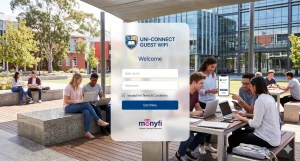
Smart building WiFi management is no longer just about providing internet access. Now it has become a core operational system that supports security, automation, guest engagement, and revenue generation. Office towers, shopping centers, hospitals, airports, universities, and mixed-use facilities now rely on structured WiFi networks to manage thousands of connected devices and users every day.
Modern buildings operate as digital ecosystems. Tenants, visitors, staff, and service providers all expect fast and reliable connectivity. However, unmanaged networks create security risks, performance issues, and missed opportunities for engagement. Therefore, organizations are investing in centralized platforms that combine access control, analytics, and monetization tools into a single system.
Today’s smart building WiFi management solutions allow facility managers to monitor network usage in real time, issue secure WiFi vouchers, and display branded login pages to visitors. In addition, advanced analytics provide insights into traffic patterns, occupancy levels, and user behavior. As a result, building operators can improve efficiency, enhance customer experiences, and generate new revenue streams.
This guide explains how modern WiFi management for smart buildings works, how to monetize guest connectivity safely, and how scalable platforms like Monyfi help organizations control, secure, and optimize their networks across multiple locations.
Centralized Control for Smart Buildings & Venues
Centralized management is the foundation of effective smart building WiFi management. Instead of configuring each access point individually, administrators can manage all devices from a single dashboard.
This approach improves reliability, simplifies operations, and reduces maintenance costs.
What Centralized Control Means
Centralized control allows administrators to:
- Monitor network performance
- Configure user access policies
- Manage multiple locations
- Update security settings
- Track device connections
- Control bandwidth usage
Therefore, building operators gain complete visibility into network activity.
Why Centralized Control Matters
Modern facilities support many connected systems, including:
- Security cameras
- Access control systems
- Digital signage
- Smart lighting
- Environmental sensors
- Guest WiFi networks
Without centralized management, these systems become difficult to maintain.
Benefits of Centralized WiFi Management
| Feature | Benefit |
|---|---|
| Unified dashboard | Simplifies network control |
| Remote management | Reduces on-site maintenance |
| Real-time monitoring | Improves performance |
| Automated updates | Enhances security |
| Multi-site support | Enables scalability |
Example Scenario
A facility manager oversees several buildings. Using centralized smart building WiFi management, they can:
- Adjust bandwidth during peak hours
- Monitor network health
- Identify connectivity issues quickly
- Deploy updates remotely
As a result, operations become more efficient and predictable.
Monetization Through Captive Portals & Vouchers
WiFi is no longer just a service. It is now a business asset. Therefore, many organizations use guest WiFi monetization strategies to generate revenue and enhance visitor engagement.
What Is a Captive Portal?
A captive portal is a login page that appears before users connect to the internet. It controls network access and provides opportunities for communication and marketing.
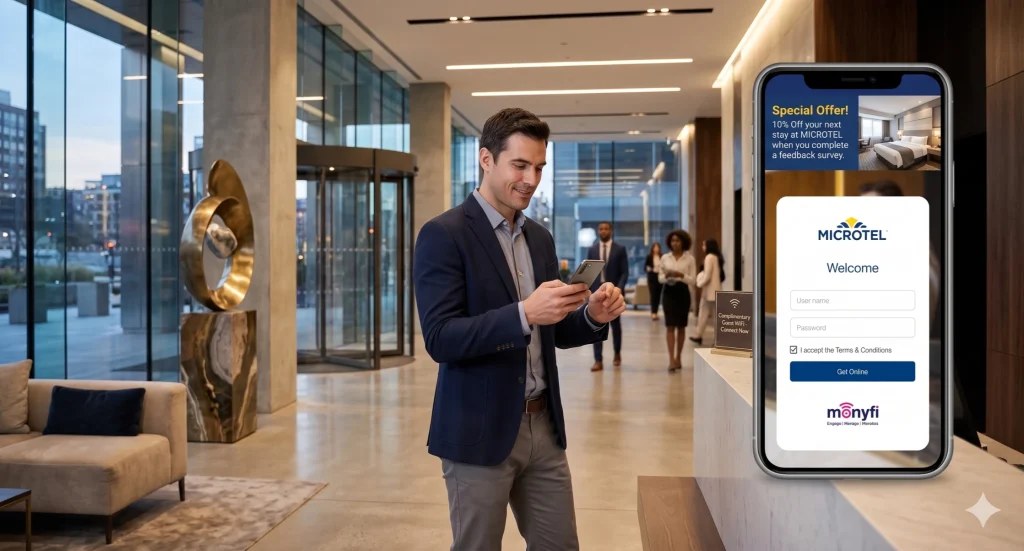
How Monetization Works
Smart building operators monetize WiFi through:
- Paid internet access
- Sponsored advertisements
- Premium service tiers
- WiFi vouchers
- Loyalty programs
This approach transforms connectivity into a revenue-generating platform.
Popular Monetization Models
| Model | Description | Revenue Source |
|---|---|---|
| Paid Access | Users pay for connectivity | Subscription fees |
| Sponsored WiFi | Brands display advertisements | Advertising revenue |
| Premium Access | Faster internet for a fee | Upgrade charges |
| Voucher Sales | Time-based access codes | Direct payments |
| Loyalty Programs | Rewards for repeat visits | Increased engagement |
Example Use Cases
Smart buildings monetize WiFi in many environments:
- Hotels
- Convention centers
- Retail malls
- Stadiums
- Co-working spaces
- Transportation hubs
Benefits of WiFi Monetization
New Revenue Streams
Organizations generate income from existing infrastructure.
Improved Customer Experience
Visitors receive reliable connectivity.
Enhanced Brand Engagement
Login pages deliver targeted messages.
Operational Efficiency
Automated systems reduce manual tasks.
Therefore, smart building WiFi monetization improves both profitability and service quality.
Guest Analytics That Drive Value
Data is one of the most powerful tools in modern facility management. Therefore, analytics plays a critical role in smart building WiFi management.
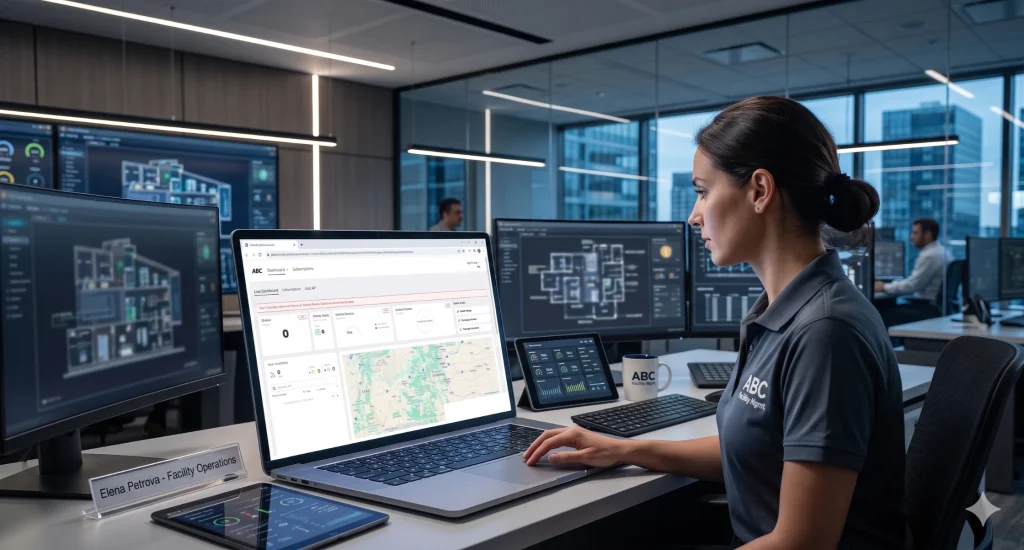
What Guest Analytics Measures
Modern platforms track:
- User connections
- Session duration
- Device types
- Peak usage times
- Traffic patterns
- Location activity
These insights help administrators understand how people use the building.
Why Analytics Matters
Analytics supports:
- Capacity planning
- Resource allocation
- Event management
- Security monitoring
- Marketing campaigns
Example Analytics Insights
A building operator may discover:
- High traffic during lunch hours
- Increased weekend activity
- Popular visitor zones
- Underused areas
This information helps improve operations.
Sample Analytics Dashboard Metrics
| Metric | Example Value |
|---|---|
| Daily users | 5,200 |
| Average session time | 45 minutes |
| Peak usage time | 1 PM |
| Most active location | Lobby |
| Returning visitors | 38% |
Business Impact of Analytics
Better Planning
Managers can anticipate demand.
Improved Efficiency
Resources are allocated effectively.
Enhanced Safety
Unusual activity is detected quickly.
Higher Revenue
Data supports targeted promotions.
Therefore, WiFi analytics for smart buildings transforms network data into actionable insights.
Step-by-Step Setup
Implementing smart building WiFi management requires a structured approach. The following steps outline a simple deployment process.
Step 1 — Assess Network Requirements
Identify:
- Number of users
- Coverage areas
- Device types
- Security needs
This assessment ensures proper system design.
Step 2 — Install Network Infrastructure
Deploy:
- Access points
- Network switches
- Routers
- Internet connections
Proper installation ensures reliable connectivity.
Step 3 — Configure the Captive Portal
Create:
- Branded login page
- Access policies
- Session limits
- Bandwidth controls
This step enables secure user authentication.
Step 4 — Enable Monetization Features
Activate:
- Voucher systems
- Payment options
- Advertising modules
- Premium access tiers
These features generate revenue.
Step 5 — Monitor Network Performance
Track:
- Connection quality
- Usage patterns
- Security alerts
- System health
Continuous monitoring ensures stability.
Step 6 — Optimize and Maintain
Regularly:
- Update software
- Adjust settings
- Review analytics
- Improve coverage
This process keeps the network efficient.
Deployment Checklist
- Define network goals
- Install hardware
- Configure access controls
- Enable analytics
- Implement security policies
- Monitor performance
Following these steps ensures successful smart building WiFi deployment.

AAA Security at Scale
Security is essential for large facilities. Therefore, many organizations use AAA WiFi security frameworks to manage network access.
AAA stands for:
Authentication
Authorization
Accounting
Together, these functions ensure secure connectivity.
Authentication
Authentication verifies user identity.
Examples:
- Email login
- Voucher code
- Device registration
Authorization
Authorization determines access permissions.
Examples:
- Internet-only access
- Restricted bandwidth
- Role-based privileges
Accounting
Accounting records network activity.
Examples:
- Login time
- Data usage
- Session duration
Benefits of AAA Security
Enhanced Protection
Unauthorized access is prevented.
User Accountability
Network activity is tracked.
Regulatory Compliance
Security policies are enforced.
Role-Based Access Example
| User Role | Access Level |
|---|---|
| Visitor | Limited internet access |
| Tenant | Standard network access |
| Staff | Extended privileges |
| Administrator | Full control |
Why AAA Matters for Smart Buildings
Large facilities support thousands of users. Therefore, scalable security systems are essential.
AAA enables:
- Secure authentication
- Controlled permissions
- Activity monitoring
- Compliance management
As a result, smart building WiFi security becomes reliable and manageable.
Best Practices
Successful smart building WiFi management depends on following proven strategies.
Best Practices
1. Use Centralized Management
Control all network devices from a single dashboard.
2. Separate Guest and Internal Networks
Prevent unauthorized access to critical systems.
3. Implement Secure Authentication
Use vouchers or role-based login methods.
4. Monitor Network Performance
Track usage and performance regularly.
5. Update Security Policies
Keep systems protected against threats.
6. Optimize Coverage
Ensure consistent connectivity across the building.
7. Train Staff
Provide basic network management training.
Common Pitfalls
Poor Network Planning
Insufficient coverage leads to connectivity issues.
Weak Security Controls
Simple passwords increase risk.
Lack of Monitoring
Problems go undetected.
Outdated Equipment
Old hardware reduces performance.
Quick Best Practices Checklist
- Deploy centralized management
- Configure secure login
- Monitor network usage
- Maintain equipment
- Review analytics regularly
Following these guidelines ensures reliable and secure smart building WiFi operations.
Why Monyfi Is the Best Choice for Smart Building WiFi Management
Managing connectivity across modern buildings requires more than basic networking tools. Smart buildings demand reliable performance, strong security, flexible monetization, and clear analytics. Therefore, organizations need a platform designed specifically for large-scale environments.
Monyfi is built to support smart buildings, multi-tenant facilities, commercial complexes, campuses, and large venues. It combines centralized control, secure access management, and revenue-generation tools into a single, easy-to-manage system. As a result, property managers and IT teams can operate their networks efficiently without increasing operational complexity.
Key Reasons Organizations Choose Monyfi
Centralized Management Across Multiple Locations
Monyfi allows administrators to manage all access points, users, and policies from one dashboard. This is especially important for smart buildings with multiple floors, departments, or branches.
Built-In Monetization Tools
The platform includes features that help organizations generate revenue directly from guest WiFi.
Examples include:
- WiFi vouchers
- Sponsored login advertisements
- Premium internet access plans
- Time-based access packages
- Event connectivity passes
These tools transform WiFi into a revenue-generating asset.
Advanced Analytics for Smart Buildings
Monyfi provides real-time data that helps facility managers understand how people use their spaces.
Analytics insights include:
- Visitor traffic patterns
- Peak usage hours
- Session duration
- Repeat visitor rates
- Device connections
These insights support better planning and smarter decision-making.
Enterprise-Level AAA Security
Security is critical in smart building environments. Monyfi uses Authentication, Authorization, and Accounting to ensure secure and controlled network access.
This framework enables:
- Role-based user permissions
- Secure login methods
- Activity tracking
- Compliance support
- Network accountability
As a result, organizations maintain strong security without disrupting user experience.
Flexible Deployment for Any Building Type
Monyfi works across a wide range of environments, including:
- Office buildings
- Shopping malls
- Hospitals
- Hotels
- Universities
- Airports
- Convention centers
- Mixed-use developments
This flexibility makes it suitable for both small facilities and large enterprise networks.
Monyfi Smart Building WiFi Features at a Glance
| Feature | Business Value |
|---|---|
| Centralized dashboard | Simplifies network control |
| Guest WiFi monetization | Generates new revenue streams |
| Real-time analytics | Improves operational decisions |
| AAA security framework | Protects users and systems |
| Multi-location management | Enables scalability |
| Custom branded login pages | Enhances brand visibility |
By combining centralized control, monetization capabilities, and enterprise-grade security, Monyfi provides a complete solution for modern connectivity needs. For organizations managing complex facilities, it delivers the reliability, flexibility, and insights required to support smart building operations in 2026 and beyond.
Conclusion
Connectivity is a critical component of modern infrastructure. Smart buildings rely on structured networks to support operations, enhance visitor experiences, and generate revenue. Therefore, effective smart building WiFi management is essential for maintaining performance and security.
By combining centralized control, guest analytics, monetization tools, and scalable security frameworks, organizations can transform WiFi into a strategic asset. In addition, data-driven insights help managers optimize resources, improve safety, and deliver better services.
Platforms like Monyfi simplify this process by providing a unified system for managing guest connectivity across multiple locations. With automated controls, real-time analytics, and flexible monetization options, organizations can deploy reliable networks without increasing complexity.
Start your free Monyfi trial or book a demo today to modernize your smart building connectivity.
FAQ: Smart Building WiFi Management
1. What is smart building WiFi management?
Smart building WiFi management is a centralized system that controls internet access, monitors network performance, and manages connected devices across a building or multiple locations. It helps administrators improve security, ensure reliable connectivity, and analyze user activity in real time.
2. How can smart building WiFi be monetized?
Smart building WiFi can be monetized through captive portals, paid access plans, sponsored advertisements, and WiFi vouchers. These methods allow building operators to generate revenue while providing convenient internet access to visitors.
3. Why is centralized WiFi control important for smart buildings?
Centralized control allows administrators to manage all network devices from one dashboard. This improves performance, reduces maintenance time, and enables quick troubleshooting across large facilities such as offices, malls, airports, and campuses.
4. What data can smart building WiFi analytics provide?
WiFi analytics tools can provide insights such as visitor counts, session duration, peak usage times, device types, and traffic patterns. These insights help facility managers optimize operations, improve services, and make data-driven decisions.
5. What is AAA security in smart building WiFi management?
AAA stands for Authentication, Authorization, and Accounting. It is a security framework that verifies user identity, controls access permissions, and records network activity to ensure secure and compliant connectivity.
6. Is smart building WiFi management suitable for multi-location properties?
Yes. Modern smart building WiFi platforms support multi-location management from a single dashboard. This makes it easy to monitor performance, enforce policies, and maintain consistent security across multiple buildings.
7. How does Monyfi support smart building WiFi management?
Monyfi provides centralized network control, secure authentication, guest WiFi monetization tools, and real-time analytics. These features help organizations manage connectivity efficiently while improving security and generating additional revenue.